

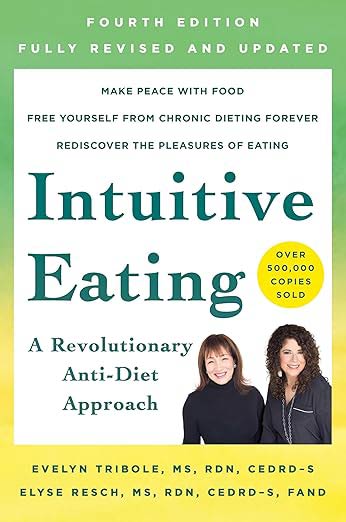
As we wrap up our discussion on The 10 Principles of Intuitive Eating we want to tie together this topic with mental health awareness month.
The connection between eating and health is a strong one.
To reiterate, authors Evelyn Tribole, and Elyse Resch first published their book The 10 Principles of Intuitive Eating in 1995 and since then it has been pivotal in the world of eating disorder treatment and the anti-diet-culture. Now in its 4th edition, it continues to be a popular and life-changing approach for so many – including us!
Principle 10: Honor Your Health with Gentle Nutrition
May is both a season of blooming and a reminder to tend to our mental well-being. As we recognize Mental Health Awareness Month, there may be no better time to revisit Principle 10 of Intuitive Eating: Honor Your Health with Gentle Nutrition.
For many people, nutrition conversations are filled with rigidity, guilt, anxiety, and perfectionism. But Principle 10 offers a refreshing shift: health is not built on one particular meal, one specific routine, or one particular body size. Instead, it is nurtured through consistent, compassionate choices that support both physical and emotional well-being.
As Evelyn Tribole and Elyse Resch write:
“Make food choices that honor your health and taste buds while making you feel well. Remember that you don’t have to eat perfectly to be healthy.”
That single sentence captures why gentle nutrition can be so supportive of mental health. It removes the exhausting pressure to “get food right” all the time. Instead of obsessing over every ingredient, calorie, or “clean eating” rule, gentle nutrition encourages flexibility, curiosity, and self-care.
When Nutrition Becomes Stressful
Many people begin their wellness journey with good intentions, only to find themselves trapped in cycles of restriction, guilt, and self-criticism. Food becomes emotionally charged. Meals are judged as “good” or “bad.” Social events create anxiety. Eating turns into something to control rather than something to experience.
Over time, this mentality can negatively affect mental health by increasing:
- Anxiety around food choices
- Shame and guilt after eating
- Obsessive thinking about health or body image
- Disconnection from hunger and fullness cues
- Chronic stress surrounding meals and weight
Principle 10 challenges the idea that health requires a specific set-up of guidelines. Instead, it recognizes that emotional well-being is part of health too.
The authors explain:
“It’s what you eat consistently over time that matters. Progress, not perfection, is what counts.”
This perspective can feel deeply healing for individuals who have spent years trapped in all-or-nothing thinking. One meal does not define your health. One dessert does not ruin your body. One “off” day does not erase your wellness.
Mental health thrives when we loosen the grip of perfectionistic thinking and rigid rules/thoughts.
Gentle Nutrition Is Gentle on the Mind
Gentle nutrition asks a radically different question than diet culture. Instead of:
- “How can I control my eating?”
it asks: - “How can I care for myself?”
What Would Your Therapist Say?
That subtle shift matters.
When we approach food from a place of care rather than fear, several things begin to happen:
- Meals become less emotionally overwhelming
- Eating becomes more intuitive and peaceful
- Stress hormones associated with chronic restriction may lessen
- We become more connected to our body’s needs
- Food regains its role as nourishment, pleasure, culture, and connection
This principle also acknowledges something incredibly important for mental health: humans are not robots. Our eating patterns will vary depending on stress, sleep, hormones, schedules, celebrations, grief, illness, and life seasons. Gentle nutrition leaves room for humanity.
Research increasingly shows strong connections between nutrition and mental health. Consistent nourishment can support:
- Mood stability
- Energy levels
- Concentration and cognition
- Emotional regulation
- Sleep quality
But intuitive eating reminds us that nutrition support works best when it is sustainable and non-punitive.
A salad eaten with fear and self-judgment is not emotionally nourishing. A cookie eaten with shame is not a moral failure. Gentle nutrition helps reduce the emotional chaos around food so people can focus on overall well-being instead of constant self-monitoring.
This is especially meaningful during Mental Health Awareness Month, when conversations about wellness often overlook the psychological impact of dieting culture and food rigidity.
What Gentle Nutrition Can Look Like
Gentle nutrition may look like:
- Adding foods that help you feel energized rather than eliminating foods out of fear
- Choosing satisfying meals that contain both nourishment and enjoyment
- Respecting hunger before becoming overly depleted
- Eating regularly to support emotional regulation
- Allowing flexibility during stressful seasons of life
- Understanding that health includes emotional peace around food
It is not about earning food. It is not about punishment. It is not about chasing perfection. It is about building trust with your body.
A Different Definition of Health
Perhaps the most powerful message of Principle 10 is that health is multidimensional. Mental health matters. Emotional peace matters. Enjoyment matters. Flexibility matters.
True wellness cannot grow in an environment of chronic shame.
As Tribole and Resch remind readers throughout Intuitive Eating, healing our relationship with food is not simply about nutrition—it is about reclaiming quality of life.
And maybe that is the heart of gentle nutrition:
Choosing nourishment not because we hate our bodies, but because we care for them.
Resources
- Intuitive Eating Official Website
- National Alliance on Mental Illness (NAMI) – Mental Health Awareness Month
- Mental Health America – Mental Health Month Resources
- Academy for Eating Disorders
- National Eating Disorders Association (NEDA)
Resources:
We keep a full list of resources on anti-diet culture and body dissatisfaction work on our website. Check out our comprehensive list here.
If you feel like you would like to have a further discussion on this topic, please contact our team to schedule a session.